
Kindred is a novel by Octavia Butler that blends elements of time travel and historical fiction.
The story follows Dana, a young Black woman from 1976, who is mysteriously transported back in time to the antebellum South. Here she must confront the harsh realities of slavery and her own ancestral connections.
Disclosure: This post may include affiliate links. As an Amazon Associate, I earn from qualifying purchases

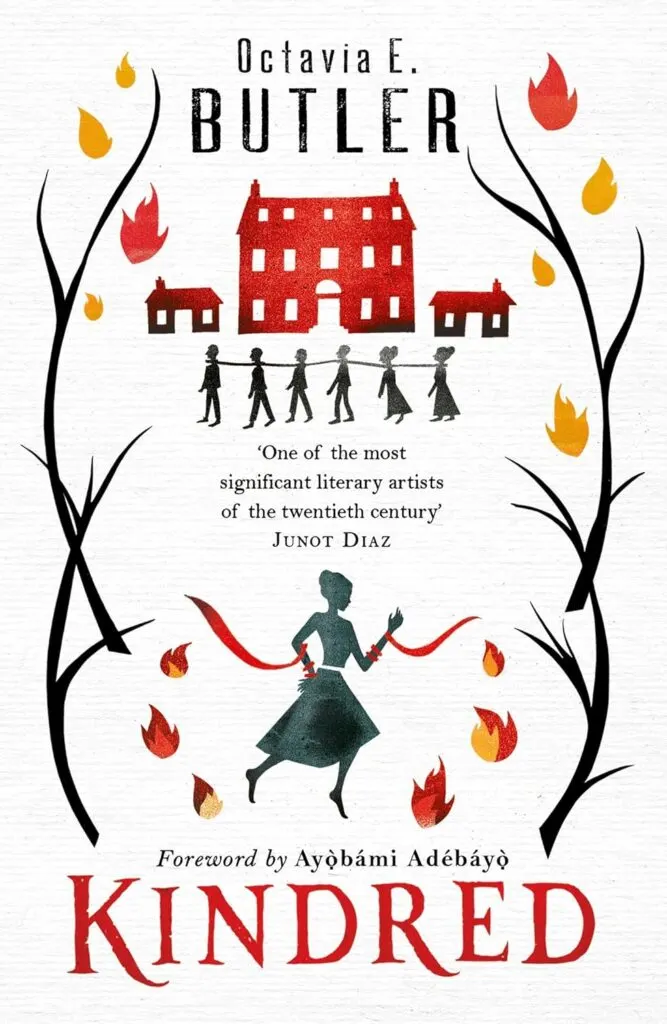
Book Blurb
In 1976, Dana dreams of being a writer. In 1815, she is assumed a slave.
When Dana first meets Rufus on a Maryland plantation, he’s drowning. She saves his life – and it will happen again and again.
Neither of them understands his power to summon her whenever his life is threatened, nor the significance of the ties that bind them.
And each time Dana saves him, the more aware she is that her own life might be over before it’s even begun.
Kindred Book Review: My Opinion


Time travel and science-fiction aren’t usually my go-to genres, but I absolutely loved this book. It’s a powerful blend of historical fiction, sci-fi and deeply human storytelling and I found myself hooked from the first page.
I thought Octavia Butler handled the time travel element brilliantly. The shifts between 1970s California and the harsh reality of a 19th-century slave plantation felt seamless.
Since I’m not particularly a fan of science fiction, I appreciated that the story didn’t get bogged down with trying to explain how time travel worked. I was happy to just go along with it!
Each trip back in time really heightened the tension and stakes. I could really appreciate how Octavia Butler used sci-fi elements to explore powerful themes like race, identity, and survival in a way that felt incredibly authentic. There are some truly gut-wrenching moments in the story that illustrate the devastating reality of slavery at the time.
Dana, the protagonist, is a character I connected with instantly. Her strength, vulnerability and moral dilemmas as she navigates this horrifying past are what make the story so gripping.
Rufus is also particularly complex character. He starts off as a sweet, yet petulant child, but as the story progresses and the institution of slavery warps him, he becomes increasingly cruel. His descent perfectly highlighted how the horrors of slavery not only brutalised the enslaved but also corrupted those in power.
Overall, even though I don’t usually gravitate toward sci-fi, I loved how Kindred used the genre to deliver such an emotional, thought-provoking, and unforgettable story.