

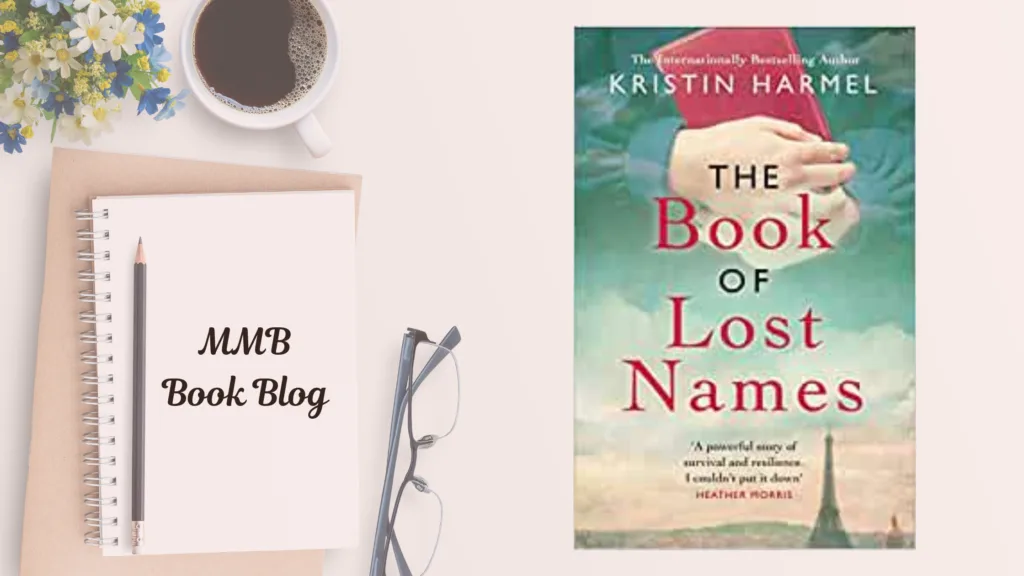
The Book of Lost Names is a 20th century historical fiction novel by Kristin Harmel, released in 2021.
After reading and enjoying The Berlin Zookeeper and The Night Train to Berlin recently, I decided to read another WW2 novel.
Throughout the 1940s, forgers helped thousands of children escape Nazi-occupied France. Whilst a work of fiction, The Book Of Lost Names by Kristin Harmel focuses on the brave men and women who created fake documents that enabled these children to escape to safety.
Disclosure: This post may include affiliate links. As an Amazon Associate, I earn from qualifying purchases


Plot
Booklover Eva is forced to flee her home in Paris after her father, a Polish jew is arrested. She manages to escape to a small mountain town in Southern France.
Here, she puts her talent for writing and art to good use. Alongside Rémy, another forger, she joins the French resistance and starts to create forged documents for those who need them.
When it becomes clear that the so-called Free Zone in France is likely to be taken over by the Nazis, Eva and Remy focus on creating documents for children to help them escape to safety.
Eva, worried that a whole generation of Jews are being erased, realises she must find a way to preserve the real names of the children who are too young to remember their own identities.
She creates The Book Of Lost Names, a secret code hidden inside an old religious textbook.
In the present day, The Book Of Lost Names is discovered and researchers are desperate to decipher its codes. Only Eva holds the answer but will she have the strength to face old memories and help reunite those lost during the war?
The Book Of Lost Names Book Review

I’ve never read a book about the forgers during the war before and found it fascinating how they created these fake documents. Not only the risk involved in undertaking the challenge but the chemistry and art involved.
It was also interesting to read about the different papers used, how to remove ink using chemicals and the tactics the Nazis used to detect forgeries. I found the use of the Fibonacci sequence as a way to hide the children’s names in the textbook really clever.
The Book Of Lost Names reminded me in part of The Nightingale by Kristin Hannah, another book I loved. The Nightingale also had a strong female lead and women who fought in the resistance. I love reading about the bravery and intelligence shown by women during such a horrific time. Eva was a likeable and relatable character, who battled with grief and guilt and desperately just wanted to help.
I didn’t find the book as harrowing as other books I’ve read based during WW2. As the book focused on the forgers, there were no real details about the concentration camps and treatment of jews as it was implied rather than discussed at length.
The book was a little predictable in places, I suspected the twists that came later in the novel. However, this didn’t spoil my enjoyment of the book. Despite the pain and terror the characters were subjected to, the story is really one of love and hope. I’m always moved when I read about the kindness of strangers during times where such empathy could have resulted in execution.
A moving story of compassion, bravery, love and hope. I really enjoyed it.
What to read next
If you’re looking to read more books about brave women during the WW2 I would recommend the following books:
- The Girl Who Escaped from Auschwitz by Ellie Midwood
- Daughters of the Resistance by Lana Kortchik
- The Yellow Bird Sings by Jennifer Rosner
- The Nightingale by Kristin Hannah
I received this book from NetGalley in exchange for my honest opinion. For more information please see my disclosure policy.