
The Witches of Vardo is a historical fiction novel by Anya Bergman.
Set in Norway during the 1662 witch trials, it tells the story of Zigri, a woman accused of witchcraft, and her daughter, Ingeborg, who embarks on a dangerous mission to rescue her.
Disclosure: This post may include affiliate links. As an Amazon Associate, I earn from qualifying purchases


Book Blurb
After recently widowed Zigri’s affair with the local merchant is discovered, she is sent to the fortress at Vardø to be tried as a witch.
Zigri’s daughter Ingeborg sets off into the wilderness to try to bring her mother back home. Accompanying her on this quest is Maren, herself the daughter of a witch. Her wild nature and unconquerable spirit gives Ingeborg the courage to venture into the unknown, and to risk all she has to save her family.
Also captive in the fortress is Anna Rhodius, once the King of Denmark’s mistress, who has been sent in disgrace to the island of Vardø. What will she do – and who will she betray – to return to her privileged life at court?
These Witches of Vardø are stronger than even the King. In an age weighted against them, they refuse to be victims. They will have their justice. All they need do is show their power.
The Witches of Vardo Review: My Opinion

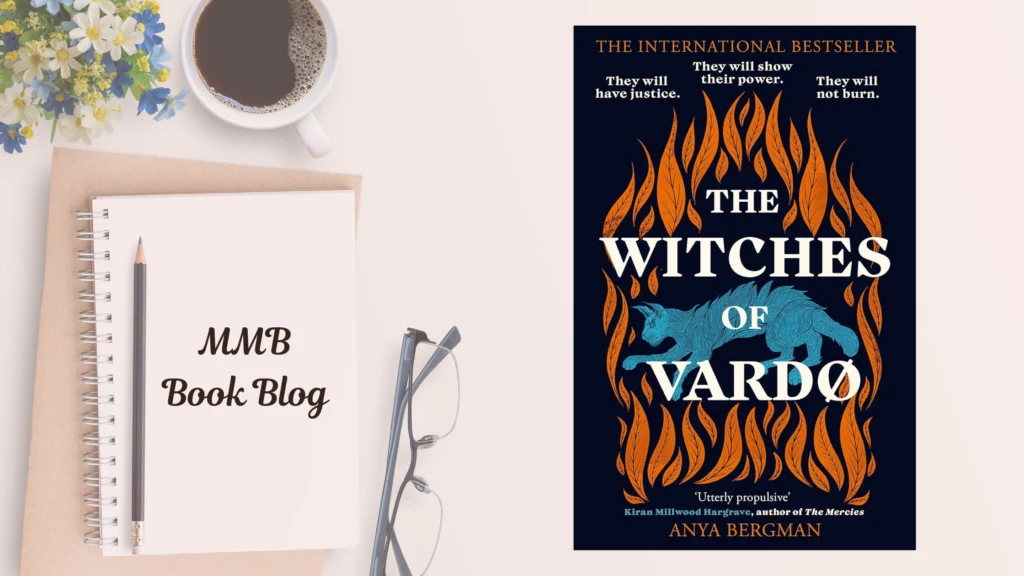
I’ve read quite a few novels about witch trials in different countries, such as The Mercies and The King’s Witches. However The Witches of Vardo still manages to provide a fresh and unique look at the trials in Norway.
It’s beautifully written and Anya Bergman’s lyrical prose pulls you right into 17th-century Norway. I felt like I was right there, experiencing the tension and fear of the time.
I also appreciated the slow burn approach as Bergman took her time laying the groundwork, showing us how ordinary women with every day struggles can suddenly become accused witches facing unimaginable trials.
Maren and Ingeborg really stole the show for me. Ingeborg’s bravery was inspiring while Maren was fierce and tenacious. From the start, there’s something almost magical about Maren. She has this uncanny connection with animals that makes you wonder if there’s more to her than meets the eye.
Anna Rhodius is another fascinating character. Her letters to her ex-lover, the King, help to reveal her past but I did find the second-person narrative a bit jarring at times. It felt like she was explaining things that the King would obviously know just to inform us as readers, which took me out of the moment a little.
I enjoyed the magical realism aspect to the story, especially Maren’s connection with animals. Is it magic or just coincidence? That uncertainty adds to the story’s charm and mystery. I also appreciated the folklore woven throughout, enriching the narrative and connecting it to the culture of the time.
Bergman also includes an author’s note titled On Fact and Fiction, which clarifies the real events that inspired the novel. This note provides valuable context and emphasises the historical significance of the witch hunts on the island of Vardo.
The Witches of Vardo is a beautifully written story about the resilience and strength. It explores themes of justice and female empowerment in a time when women were often powerless. I loved it and can’t wait to read whatever Anya Bergman writes next.